aspurus study on libido and low sexual desire
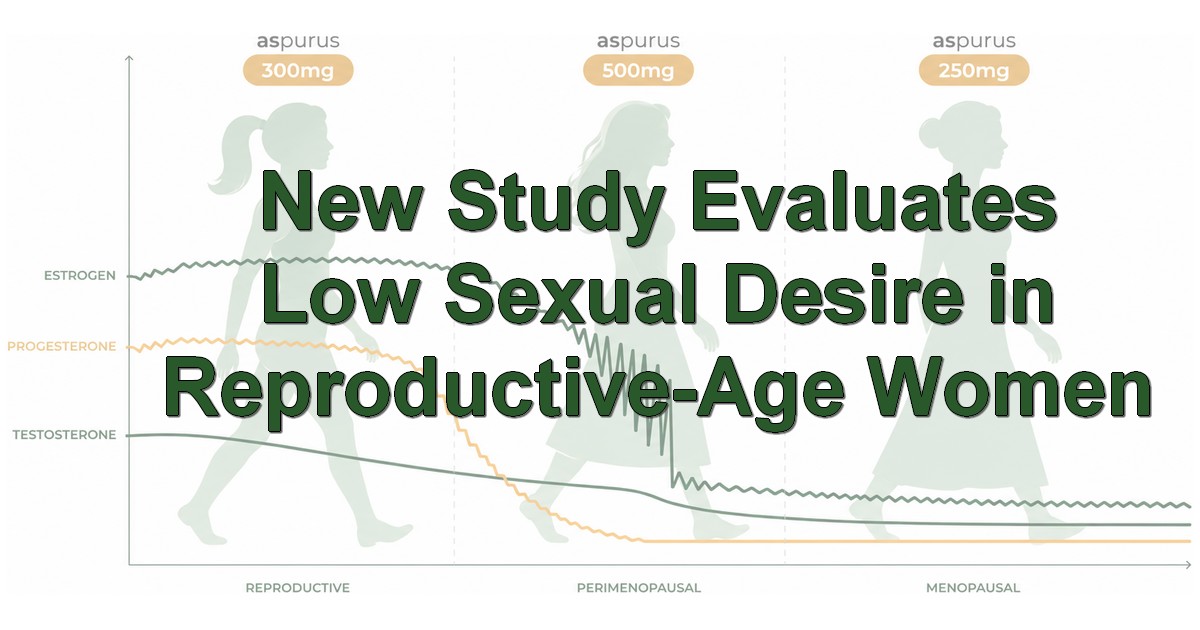
New Aspurus published study evaluates low sexual desire in reproductive-age women, with measures of vaginal moisture, libido, fatigue and qexual function
Low sexual desire can affect women throughout their lives, yet it remains overlooked and less researched in younger women. New clinical-trial data suggests, aspurus, a standardized Shatavari root extract may support sexual wellbeing in reproductive-age women.
Publication right now of a new sexual health clinical study evaluating aspurus, in reproductive-age women reporting low sexual desire. Published in the Journal of Medicine and Life, the randomized, double-blind, placebo-controlled study included 70 women aged 18–42 years and evaluated 300 mg/day of aspurūs for eight weeks.
Sexual-health studies often group women ages 18–60 together, despite their different hormonal life stages. While older cohorts experience libido drops from natural hormonal depletion, younger women maintain optimal ovarian function. The decline in young women’s libido is distinct from age-related hormonal depletion, operating instead as a complex, multifactorial issue triggered by modern lifestyle crisis driven by intense fatigue, sleep deficits, and anxiety.
The new study focuses specifically on women of reproductive age, allowing the findings to be evaluated within a defined hormonal life stage rather than across a population spanning reproductive and postmenopausal years. In addition, the study evaluated multiple dimensions of sexual function alongside fatigue, sleep, and vaginal moisture. The objective assessment of vaginal moisture provided an additional physiological measure of lubrication, complementing the participant-reported measures of sexual function.
aspurus is a full-spectrum Shatavari root extract that mimics the native root’s phytoprofile while designed to preserve the seven bioactives and 5% Shatavarins. The groundbreaking women’s health ingredient is backed by 3 clinical studies and is designed to help alleviate the major symptoms of menopause across different periods of a woman’s life.
Study Results
Compared with placebo, women receiving aspurus experienced improvements across several measures of sexual function during the eight-week intervention. The total FSFI score improved significantly from baseline to Day 56 (p<0.001), with improvements in sexual desire (34.54%), arousal (64%), and sexual satisfaction (80%). Objectively measured vaginal moisture improved by 63%. Improvements were also observed in fatigue (60.1%) and sleep disturbance (21.8%). The extract was well tolerated throughout the study, with no serious adverse events reported.
“A woman in her early 20s and a woman in her 50s navigating menopause may both experience low sexual desire, but they are experiencing that concern within very different physiological and life-stage contexts,” said Komal Baldwa, Founder of Waleria HealthTech. “The same symptom does not mean the same root cause. That insight drove us to design this study specifically around younger women or reproductive-age women, whose ovarian function is intact but whose lifestyles are exhausting. The study is in alignment with reported data about the decline in libido in younger women as a physiological consequence of chronic fatigue, sleep deficits, and anxiety. Rather than examining libido in a vacuum, we tracked how physical comfort and lubrication intersect with modern fatigue and sleep deficits to capture whole picture of younger female sexual wellness.”
About Waleria Healthtech
Waleria Healthtech is a women-first ingredient company with a completely women-owned supply chain. Recognized by NBJ and AHPA for its unique and first-of-its-kind women-owned supply chain, the company is focused on delivering life-stage dose-optimized solutions for greater personalization and innovation to brands. Waleria works to empower its women-owned supply chain while validating scientifically validated, consumer-focused solutions for women consumers.